X
X.25
An ITU-T packet-switching protocol suite for WANs, from 1976, using virtual circuits with error correction at every hop. It was widely used in the 1980s, for example for cash machines, and IP has replaced it.
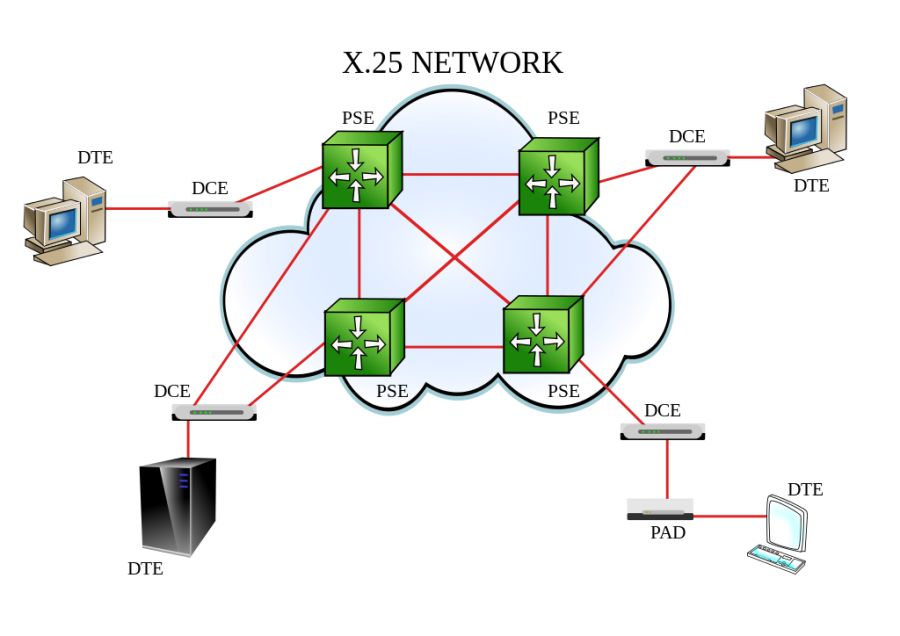
X.25.
See also: Frame Relay, HDLC.
X.509
The ITU-T standard format for public key certificates, which bind an identity, such as a host name, to a public key under a CA’s signature. TLS and many other protocols use them.
XML
Extensible Markup Language. A W3C text format for structured documents and data, with user-defined, nested elements. It is the basis of many formats and protocols, such as SOAP and SVG.
See also: XML Schema, JSON, SGML.
XML Schema
A description of the allowed structure and content of a type of XML document, used to validate documents. DTD, XSD and RELAX NG are schema languages.
XML-RPC
A simple remote procedure call protocol that encodes calls in XML and sends them over HTTP. SOAP grew out of it.
See also: JSON-RPC, SOAP, RPC.
XMPP
Extensible Messaging and Presence Protocol. An open, XML-based protocol for instant messaging and presence, originally called Jabber. It has been extended for many other real-time uses.
See also: SIMPLE.
XP
Extreme Programming. An agile method that focuses on engineering practices, such as pair programming, test-driven development, continuous integration, refactoring and small releases.
See also: Pair Programming, TDD, Agile development.
Xsd
XML Schema Definition. The W3C’s XML schema language. It describes the elements and attributes an XML document may contain, with data types, so documents can be validated.
See also: XML Schema.
XSS
Cross-Site Scripting. A web vulnerability in which an attacker gets a site to include their script in pages other users view. The script then runs with the site’s privileges in the victims’ browsers. Encoding output and a content security policy prevent it.
See also: Pen testing.