T
T-Shirt Sizing
Estimating by sorting items into rough relative sizes, such as extra small, small, medium, large and extra large, rather than giving false precision.
See also: Relative Estimation, Points.
Task
A small, distinct unit of work in a project.
See also: Activity, Work Item.
Task Board
A board with columns such as “To do”, “In progress” and “Done”, on which cards for tasks move as work progresses.
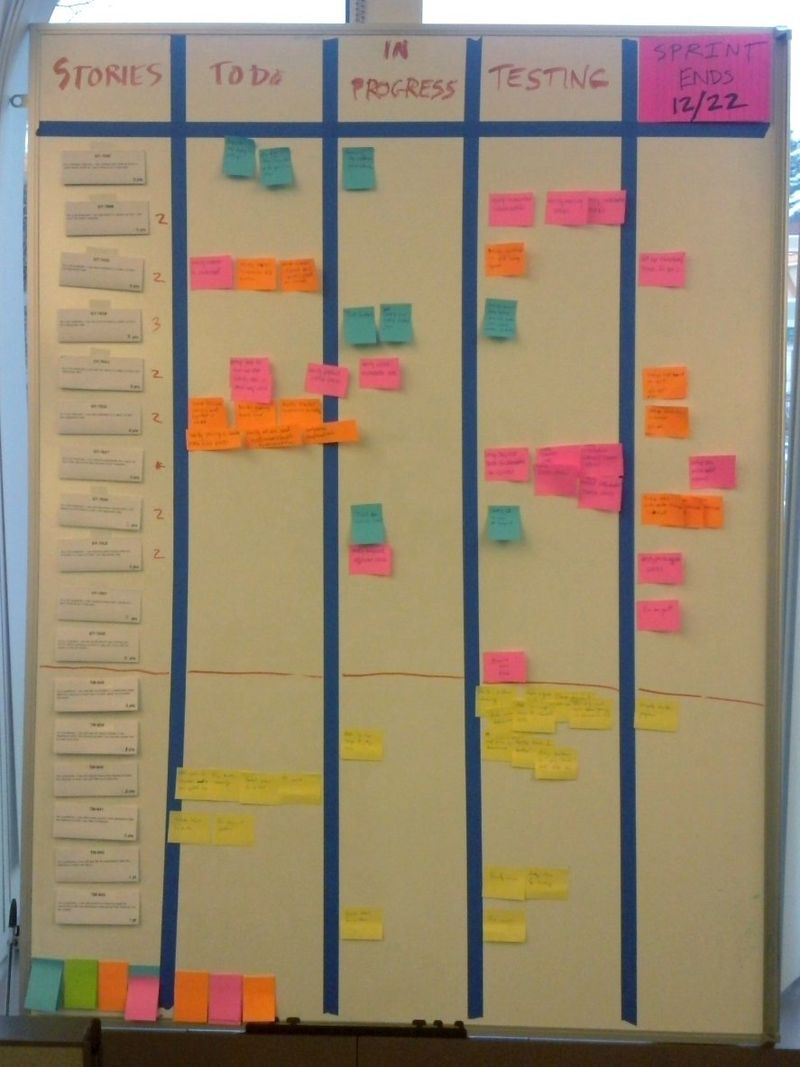
Task Board.
See also: Kanban Board, Information Radiators.
Task Estimate
An estimate for a single task, usually made during planning and tracking and fed into work plans and detailed schedules.
See also: Project Estimate, Estimate.
TCAP
Transaction Capabilities Application Part. The SS7 layer that manages dialogues between applications, such as MAP, INAP and CAP, using transaction IDs to run many at once. It encodes messages with ASN.1 BER.
See also: SS7, MAP, INAP, CAP.
Tcl/tk
Tcl is a dynamic scripting language, and Tk is the cross-platform GUI toolkit that grew up with it. Together they offer a quick way to build desktop interfaces, and other languages, such as Python’s Tkinter, also use Tk.
TCP
Transmission Control Protocol. The internet’s main transport protocol (RFC 9293). It gives applications a reliable, ordered, error-checked byte stream over IP, with flow and congestion control. The web, email and file transfer use it.
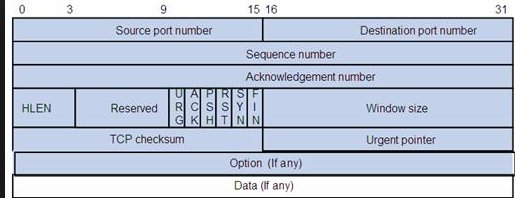
TCP.
See also: UDP, Internet Protocol Suite, Out-of-order delivery.
Tcsh
An enhanced C shell that adds command-line editing and completion. It was long the default shell for the root user on FreeBSD.
See also: Csh.
TDD
Test-Driven Development. Writing a failing unit test first, then the simplest code that passes it, then refactoring, in short repeated cycles.
See also: Unit Testing, Refactoring, BDD.
TDM
Time-Division Multiplexing. Sharing a channel by giving each signal its own repeating time slot. Digital telephony carries each call in a 64 kbit/s slot, for example 30 calls on an E1.
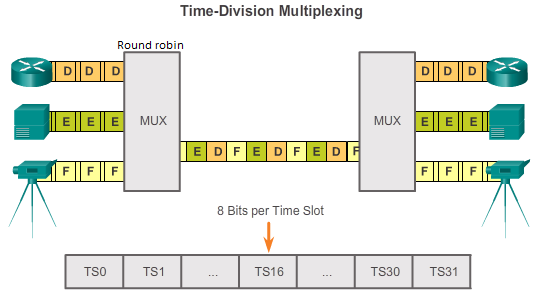
TDM.
See also: Multiplex, PDH, SDH.
Team
In agile terms, a small group of people working on the same product or goal, nearly all of them full time.
Team Room
A space set aside for a team for the length of a project, so that its members, including the product owner, can work together closely.
See also: Information Radiators.
Technical Debt
The future cost of rework caused by choosing a quick solution now over a better one that would take longer. Like money, it gathers interest: left unpaid, it makes every later change harder.
See also: Refactoring.
Template
An outline or framework for creating an artefact.
Test
A single test case, or testing in general.
Test Activity
A specific test procedure, combining one or more test techniques and test types.
Test Case
TC. The inputs, steps and expected results that check whether a feature works or a requirement is met.
See also: Test Case Specification, Test Plan.
Test Case Specification
TCS. A document listing the test cases that verify one or more features.
See also: Test Case.
Test Design
Working out how to test a product: linking test cases to its requirements and design, when testing needs real analysis and structure.
See also: Test Design Specification.
Test Design Specification
TDS. A document recording the test design for a group of test cases.
See also: Test Design.
Test Level
See Test Type.
Test Plan
TP. A document setting out the scope, approach, resources, test items and schedule of testing.
See also: Quality Plan, Test Case.
Test Technique
The method used in a test activity, such as boundary value analysis or equivalence partitioning.
Test Type
A category of testing, such as unit, integration, system or acceptance testing, defined by what it tests, how, why and when.
Testing
Running software to find defects and to show that it meets its requirements.
See also: Quality Control, Test Plan.
Three Amigos
A meeting of the three main perspectives on a piece of work, business, development and testing, to agree what it should do before, during and after development.
Three C’s
Card, Conversation, Confirmation. The three parts of a user story: a short note on a card, the conversation that fills in the detail, and the acceptance tests that confirm it is done.
See also: User Stories.
Three Questions
The traditional structure of the daily stand-up: what did I complete, what will I do next, and what is in my way?
See also: Daily Scrum.
TIA
Telecommunications Industry Association. The US trade body, accredited by ANSI, that develops standards such as TIA-568 for structured cabling.
Timebox
A fixed, agreed period in which a person or team works towards a goal, and which ends on time whether or not everything is done.
TKIP
Temporal Key Integrity Protocol. The stop-gap Wi-Fi security protocol, from 802.11i, that replaced WEP on existing hardware. It is no longer secure and was deprecated in 2012.
TLS
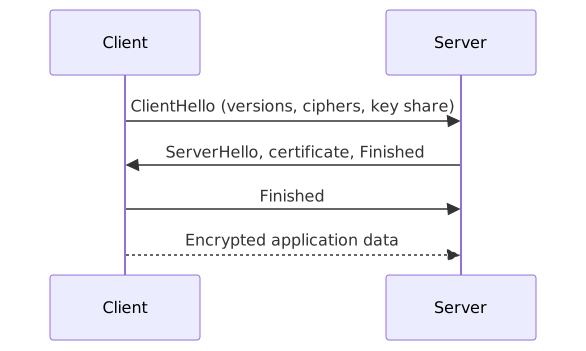
Transport Layer Security. The protocol that encrypts and authenticates connections between applications, such as HTTPS. A handshake authenticates the server, usually with an X.509 certificate, and agrees keys. Symmetric encryption then protects the data. TLS 1.3 (RFC 8446) is current, and it replaced SSL.
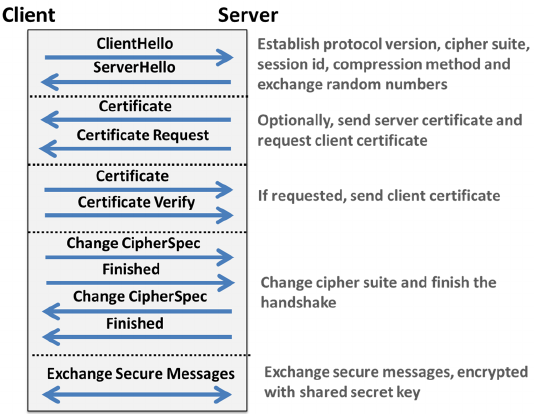
TLS.
A TLS 1.3 handshake, simplified.
See also: HTTPS, DTLS, X.509, SSL.
TLV
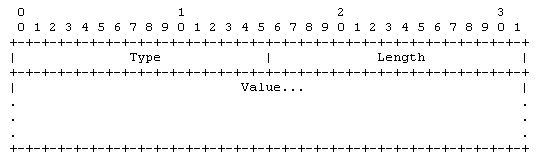
Type-Length-Value. An encoding in which each element has a type code, a length and then the value. Receivers can skip elements they do not understand, so formats can grow. BER, IS-IS and many other protocols use it.
TLV.
See also: BER.
TOGAF
The Open Group Architecture Framework. A widely used enterprise architecture framework. Its Architecture Development Method (ADM) guides architecture work across the business, data, application and technology domains.
See also: Architecture, ADR.
Token Ring
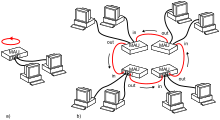
A LAN technology from IBM, standardised as IEEE 802.5. A token passes round a ring of stations, and only the station holding it may transmit. There are therefore no collisions. Ethernet replaced it.
Token Ring.
See also: FDDI.
TOML
Tom’s Obvious, Minimal Language. A configuration file format, created by Tom Preston-Werner, designed to be easy to read and to map clearly to a dictionary. Python’s pyproject.toml and Rust’s Cargo.toml use it.
Top Level Schedule
See Business Schedule.
Top-Down Estimation
Estimating a whole system first, then dividing the total among its parts.
See also: Bottom-Up Estimation, Macro Estimation.
Triple DES
3DES, or TDEA. DES applied three times to each block with two or three keys, to extend its life after DES’s 56-bit key became too short. It is slow and now deprecated in favour of AES.
TTY
Teletypewriter. Originally an electromechanical typewriter used as a terminal. On Unix the name now means any terminal device, including a terminal emulator window.
See also: Unix.
TrustZone
Arm’s hardware security extension that splits a processor into a secure world and a normal world. The secure world holds keys, secure boot and trusted applications, isolated from the main operating system. It exists on Cortex-A and, as Armv8-M, on Cortex-M.
See also: Root of Trust, Secure Element.
TUP
Telephone User Part. The first SS7 call control protocol, for ordinary telephone calls without ISDN features. ISUP has largely replaced it.
Twisted pair
Cable in which the two wires of each circuit are twisted together, which cuts interference and crosstalk. It is used for telephone lines and Ethernet.
See also: Cat 5, Ethernet over twisted pair.